
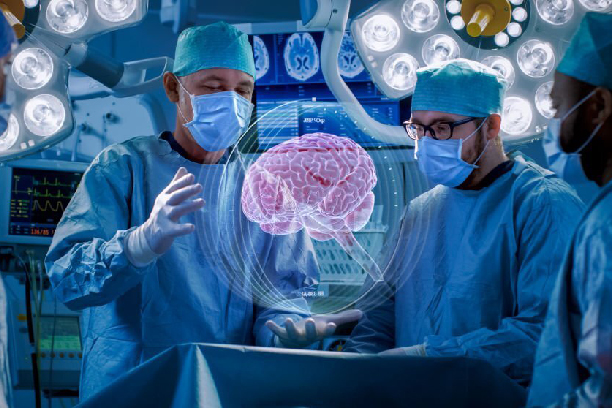
Neurosurgery, one of the most complex fields in modern medicine, is entering a new era. The future of neurosurgery promises to be more precise, less invasive, and far safer — thanks to the rapid growth of technology, artificial intelligence, and robotics.
1. The Rise of Robotic-Assisted Surgery
Robots are no longer limited to science fiction. In advanced neurosurgery, robotic systems are helping surgeons perform operations with unmatched accuracy. Robotic arms can make microscopic movements that reduce damage to surrounding tissues, shorten recovery time, and improve patient outcomes. In the near future, robotic-assisted neurosurgery will become a standard in operating rooms worldwide.
2. Artificial Intelligence and Smart Diagnosis
Artificial Intelligence (AI) is changing the way doctors diagnose and plan treatments. AI-powered imaging tools can now detect brain tumors, aneurysms, and spinal issues faster and more accurately than ever before. Machine learning helps neurosurgeons create personalized treatment plans based on each patient’s unique brain structure and condition.
3. Minimally Invasive Techniques
Traditional brain or spine surgery often required large incisions and long recovery periods. Today, minimally invasive neurosurgery allows doctors to operate through tiny openings using advanced endoscopes and 3D imaging. This approach reduces pain, scarring, and hospital stays — making recovery faster and more comfortable for patients.
4. Virtual Reality and 3D Simulation
Before performing a surgery, neurosurgeons can now “practice” on 3D virtual models of the patient’s brain using Virtual Reality (VR) technology. This not only improves surgical precision but also reduces risks during real procedures. Medical students and trainees also benefit from this technology, gaining hands-on experience in a safe, simulated environment.
5. The Future Is Personalized
The future of neurosurgery lies in personalization. Genetic research and brain mapping are paving the way for customized surgical approaches. Soon, every patient will receive a treatment plan designed specifically for their biological makeup.
Final Thoughts:
The future of neurosurgery is bright and full of innovation. With AI, robotics, and virtual reality working together, patients can expect safer surgeries, quicker recoveries, and more successful outcomes. What once seemed impossible in brain and spine surgery is now becoming reality — shaping a smarter, more compassionate future for healthcare.